The Rise of Autonomous AI CRM Agents: Redefining Customer Relationship Management in the Digital Era

In the fast-paced world of modern business, the acronym CRM (Customer Relationship Management) has long been synonymous with data entry, clunky spreadsheets, and manual follow-ups. For decades, these systems served as passive repositories—digital filing cabinets where sales teams dumped contact information and interaction logs. However, we are currently witnessing a seismic shift. The era of the passive database is ending, and the era of the Autonomous AI CRM Agent is beginning.
What Exactly is an Autonomous AI CRM Agent?
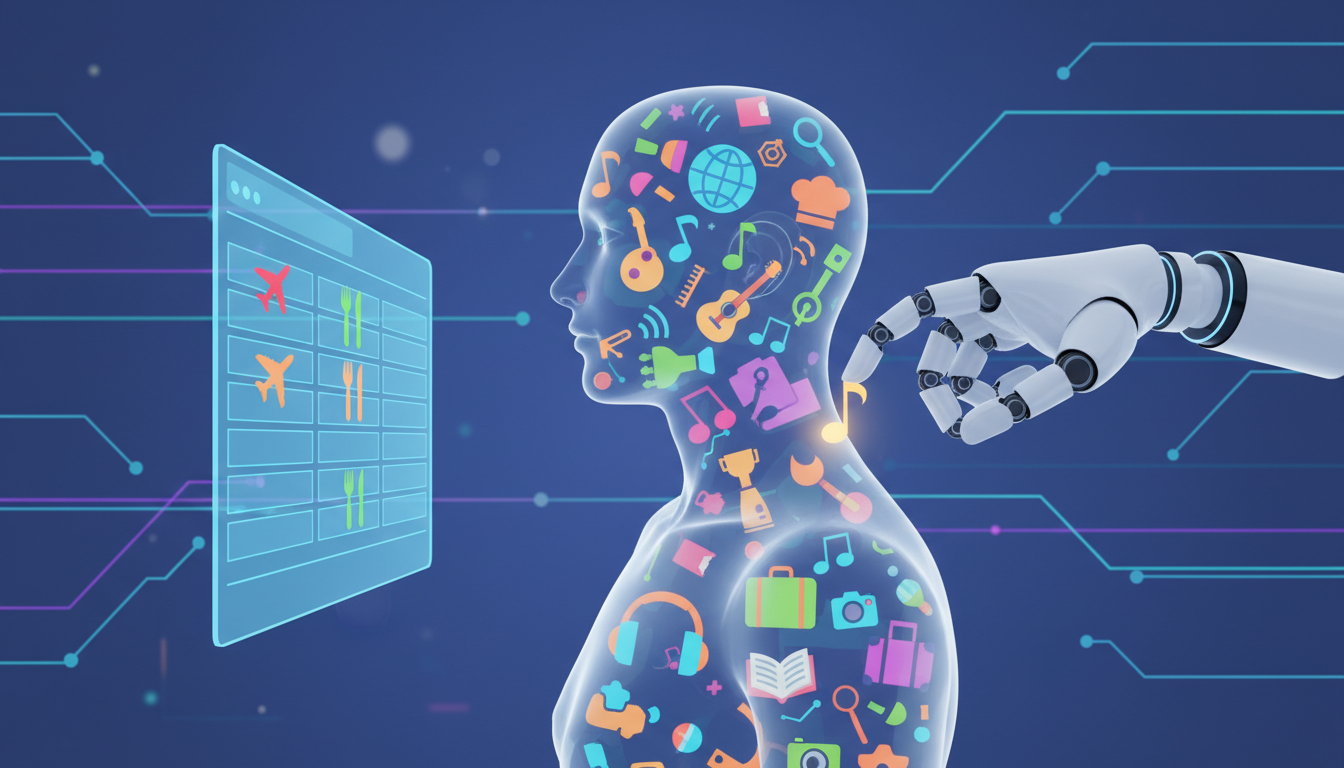




To understand this evolution, we first need to distinguish between standard AI and autonomous agents. Traditional AI in CRM might offer a simple chatbot or a basic predictive lead score. These are tools that require a human to pull the trigger. You ask it a question, it gives an answer. You look at a score, you decide who to call.
Autonomous AI CRM agents, however, are fundamentally different. These are ‘agentic’ systems powered by Large Language Models (LLMs) that can reason, plan, and execute tasks with minimal human intervention. Instead of waiting for a command, an autonomous agent observes the incoming data, identifies a need, and takes action to fulfill a goal. Imagine a system that doesn’t just tell you a lead is interested but goes ahead and researches the lead’s company, drafts a personalized outreach email, sends it at the optimal time, and schedules a meeting directly onto your calendar.
[IMAGE_PROMPT: A futuristic corporate office environment featuring a sleek, holographic interface displaying an AI agent managing a complex web of customer interactions, data analytics charts, and automated scheduling workflows in high resolution.]
The Shift from Passive to Proactive Engagement
The primary value proposition of an autonomous CRM agent lies in its proactivity. In a traditional setup, a salesperson might spend 60% of their day on administrative tasks—updating records, searching for emails, and cleaning up data. Autonomous agents flip this script by handling the ‘drudge work’ of the sales and support cycles.
For instance, consider the lead qualification process. Normally, a lead fills out a form, and it sits in a queue until a representative has time to review it. An autonomous agent can instantly analyze the lead’s profile, cross-reference it with historical success data, and initiate a conversation via chat or email to ask clarifying questions. If the lead meets the criteria, the agent can guide them through the middle of the funnel without a human ever lifting a finger. This ensures that ‘speed-to-lead’ is measured in seconds, not hours, significantly increasing conversion rates.
Transforming Customer Support and Success
Beyond sales, autonomous agents are revolutionizing customer success. We have all experienced the frustration of a basic chatbot that loops through a script of ‘I don’t understand that’ responses. Autonomous agents, equipped with deep contextual understanding of your product documentation and customer history, can solve complex problems independently.
They can troubleshoot technical issues, process refunds based on company policy, and even proactively reach out to customers who exhibit signs of ‘churn risk.’ If the data shows a user hasn’t logged in for two weeks, the agent doesn’t just alert a human; it can craft a helpful ‘check-in’ message with a personalized tutorial link based on that specific user’s past behavior. This level of personalized, at-scale attention was previously impossible.

The Technical Underpinnings: How It Works
How do these agents actually ‘think’? The secret lies in a combination of LLMs and Retrieval-Augmented Generation (RAG). By connecting an LLM to your internal CRM data (the RAG component), the agent gains ‘eyes’ on your business logic and customer history.
Furthermore, these agents are connected to ‘tools’ via APIs. They aren’t just generating text; they are calling functions. When an agent decides a meeting needs to be booked, it uses a tool to check the salesperson’s availability. When it needs to update a lead status, it writes directly to the CRM database. This ability to manipulate the environment is what grants them their ‘agentic’ status.
The Human Element: Co-pilot vs. Replacement
A common concern is whether these autonomous agents will replace human workers. In reality, the most successful implementations see AI as an ‘orchestrator’ or a ‘co-pilot.’ While the agent handles the high-volume, repetitive tasks, the human team is freed up to focus on high-stakes negotiations, complex problem-solving, and building genuine emotional connections with clients.
A formal yet casual approach to this technology suggests that we shouldn’t fear the machine; we should embrace the efficiency. Think of the autonomous CRM agent as your most diligent, 24/7 assistant who never sleeps, never forgets a follow-up, and has read every single document your company has ever produced.
Challenges and Ethical Considerations
Of course, with great power comes great responsibility. Deploying autonomous agents requires rigorous guardrails. There are valid concerns regarding data privacy, AI ‘hallucinations’ (where the AI makes up facts), and the potential for losing the ‘human touch’ that defines many brands. Companies must ensure that their AI is transparent—customers should generally know when they are interacting with an agent—and that there is always a ‘human-in-the-loop’ option for escalation.
Looking Ahead: The Future of Autonomous CRM
We are only at the beginning of this journey. Future autonomous CRM agents will likely integrate more deeply with multi-modal AI—processing voice, video, and sentiment analysis in real-time to adjust their tone and strategy. We might see ‘Agent-to-Agent’ commerce, where a buyer’s AI agent negotiates terms with a seller’s AI agent, leaving the humans to simply sign the final agreement.
In conclusion, the transition to autonomous AI CRM agents is not just a trend; it is a fundamental shift in how business is conducted. Organizations that adopt these systems early will find themselves with a massive competitive advantage, characterized by hyper-efficiency and unparalleled customer insights. The question is no longer whether you should automate your CRM, but how quickly you can empower your agents to start working for you.
Whether you are a startup looking to scale quickly or an enterprise aiming to optimize thousands of interactions, the autonomous agent is your gateway to a more intelligent, responsive, and ultimately more profitable future.