The Future of Relationship Management: Navigating the Rise of ESG-Integrated CRM Software

In the contemporary business landscape, the definition of ‘success’ is undergoing a radical transformation. Gone are the days when a company’s health was measured solely by its quarterly revenue or profit margins. Today, stakeholders—ranging from institutional investors to Gen Z consumers—are demanding a new level of accountability. This shift has placed Environmental, Social, and Governance (ESG) criteria at the heart of corporate strategy. But how does a business operationalize such broad, ethical goals? The answer lies in the tool most central to modern commerce: Customer Relationship Management (CRM) software. ESG-integrated CRM software is no longer a niche luxury; it is becoming the backbone of the sustainable enterprise.
The Convergence of Data and Ethics





At its core, a CRM system is a repository of information. Traditionally, this information focused on lead scores, purchase histories, and communication logs. However, as the global economy pivots toward ‘stakeholder capitalism,’ the scope of data needs to expand. ESG-integrated CRM software bridges the gap between ethical intent and measurable action. It allows companies to track not just how much they sell, but how they sell it and what impact those sales have on the world around them.
Environmental factors in a CRM context might involve tracking the carbon footprint of a sales team’s travel or the energy efficiency of the data centers hosting the software. Social factors could involve monitoring the diversity of a client base or ensuring that sales practices align with fair-labor standards. Governance, perhaps the most natural fit for CRM, involves data privacy compliance, ethical lead sourcing, and transparent reporting. When these metrics are baked directly into the CRM, sustainability ceases to be a separate ‘report’ and becomes a daily operational reality.
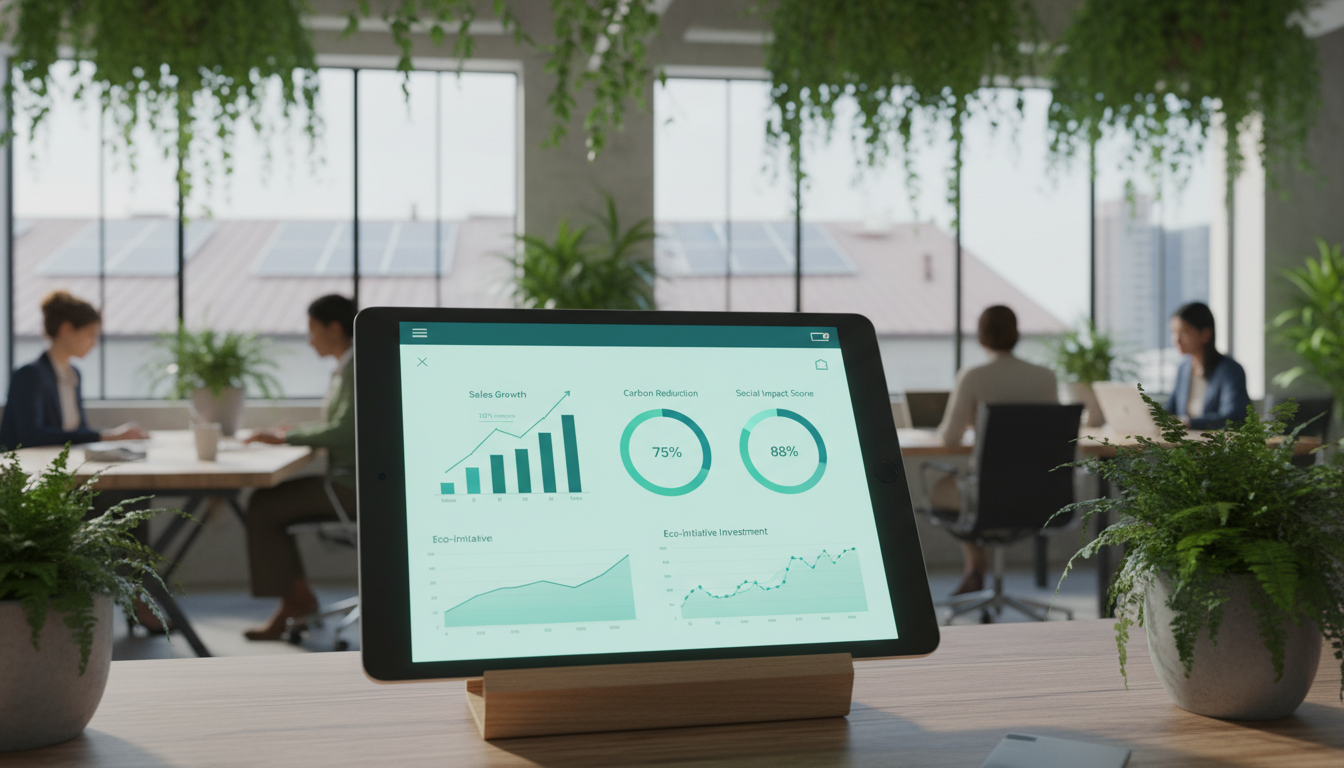
Why ESG Integration is a Competitive Advantage
One might ask, “Isn’t this just more bureaucracy?” On the contrary, integrating ESG into CRM systems offers a significant competitive edge. First and foremost is the issue of trust. In an era of ‘greenwashing’ skepticism, transparency is currency. When a salesperson can pull up a record and show a client the exact carbon offset associated with a contract, or demonstrate a supply chain’s ethical pedigree, it builds a level of rapport that traditional sales tactics cannot match.
Secondly, the regulatory environment is tightening. From the EU’s Corporate Sustainability Reporting Directive (CSRD) to shifting SEC guidelines in the United States, companies are increasingly mandated to disclose their ESG impact. Having this data integrated into the CRM makes compliance a seamless process rather than a frantic end-of-year scramble. It transforms the CRM into a ‘single source of truth’ for both sales performance and ethical performance.
Key Features of ESG-Forward CRM Systems
What does an ESG-integrated CRM actually look like in practice? It usually involves several specialized modules that complement traditional CRM functions:
1. Carbon Footprint Trackers: Many modern CRMs now offer integrations that automatically calculate the emissions generated by business travel or product delivery associated with a specific deal. This allows sales teams to optimize their routes and methods for the lowest environmental impact.
2. Ethical Lead Scoring: Beyond just ‘propensity to buy,’ ethical lead scoring looks at the prospect’s own ESG rating. This ensures that a company’s sales efforts are aligned with its corporate values, avoiding partnerships with entities that might pose a reputational risk.
3. Inclusive Engagement Modules: These tools help businesses ensure their outreach is inclusive. By tracking demographic data (where legally permissible) and accessibility standards for communication, companies can ensure they are serving a diverse ecosystem of stakeholders.
4. Data Sovereignty and Governance Hubs: Robust governance means more than just a password. It means automated ‘Right to be Forgotten’ workflows, audit trails that prove data was sourced ethically, and encryption standards that protect the digital rights of the customer.

Overcoming the Implementation Hurdle
Transitioning to an ESG-integrated CRM is not without its challenges. The primary obstacle is often ‘data silos.’ In many organizations, sustainability data lives in the HR or Supply Chain departments, while customer data lives in Sales. Breaking down these walls requires not just new software, but a change in corporate culture. Leadership must emphasize that ESG is everyone’s job, not just the ‘Sustainability Officer’s.’
Furthermore, there is the challenge of standardization. Unlike financial accounting, which has centuries of established rules, ESG metrics are still evolving. This requires a CRM that is flexible—one that can adapt its data fields and reporting structures as new global standards emerge. It’s about choosing a platform that is ‘future-proof’ against the shifting sands of global regulation.
The Human Element: Employees and the New CRM
An often-overlooked benefit of ESG-integrated CRM software is its impact on employee engagement. The modern workforce, particularly Millennials and Gen Z, wants to work for companies with a purpose. When a sales representative sees that their CRM helps them contribute to a greener planet or a fairer society, it boosts morale. It shifts the narrative from “I’m just hitting a quota” to “I’m contributing to a sustainable legacy.” This sense of purpose is a powerful tool for talent retention in a competitive job market.
Conclusion: The New Standard for Doing Business
As we look toward the next decade, the integration of ESG into CRM software will likely move from a ‘pioneering move’ to a ‘baseline requirement.’ The businesses that thrive will be those that recognize that their relationships with customers are inseparable from their relationship with the planet and society at large. By embedding ethics into the digital architecture of their sales processes, companies can ensure they are not just profitable today, but viable and respected for generations to come. ESG-integrated CRM isn’t just about managing data; it’s about managing a commitment to the future.