Mastering the Future of Customer Retention: A Deep Dive into Predictive Churn Analysis within CRM Systems

Mastering the Future of Customer Retention: A Deep Dive into Predictive Churn Analysis within CRM Systems
In the hyper-competitive landscape of modern business, the old adage that “it costs five times more to acquire a new customer than to retain an existing one” has never been more relevant. As markets become saturated and customer loyalty becomes increasingly fickle, organizations are shifting their focus from aggressive acquisition to strategic retention. At the heart of this shift lies a powerful technological synergy: the integration of Predictive Churn Analysis into Customer Relationship Management (CRM) systems. This article explores how businesses are leveraging data science to foresee the future, identifying which customers are packing their bags before they even reach for the door.
The Silent Profit Killer: Understanding Churn

Customer churn, or attrition, is the rate at which customers stop doing business with an entity. It is the silent leak in the bucket of corporate growth. While some churn is inevitable—the so-called “natural attrition”—a significant portion is often preventable. The challenge, however, has always been timing. Traditionally, businesses only realized a customer had left after the fact, usually when a subscription wasn’t renewed or a monthly spend dropped to zero. By then, it was too late for a “win-back” strategy to be truly effective.
Enter predictive churn analysis. Instead of looking in the rearview mirror, predictive analytics uses historical data, machine learning, and statistical algorithms to determine the likelihood of a customer leaving in the near future. When this intelligence is baked directly into a CRM, it transforms the platform from a mere database into a proactive engine for revenue protection.
The Mechanics: How Predictive Models Work in CRM
Predictive churn analysis isn’t magic; it’s math. The process begins with data aggregation. Your CRM is a goldmine of information, housing interaction logs, purchase histories, support tickets, and demographic details. To build an effective model, data scientists look for patterns in the behavior of past customers who have already churned.
Typical indicators include a decrease in login frequency, a sudden spike in customer support complaints, late payments, or even a lack of engagement with marketing emails. By feeding this historical data into machine learning models—such as Logistic Regression, Random Forest, or Gradient Boosting—the system learns to recognize the “fingerprint” of a churning customer.
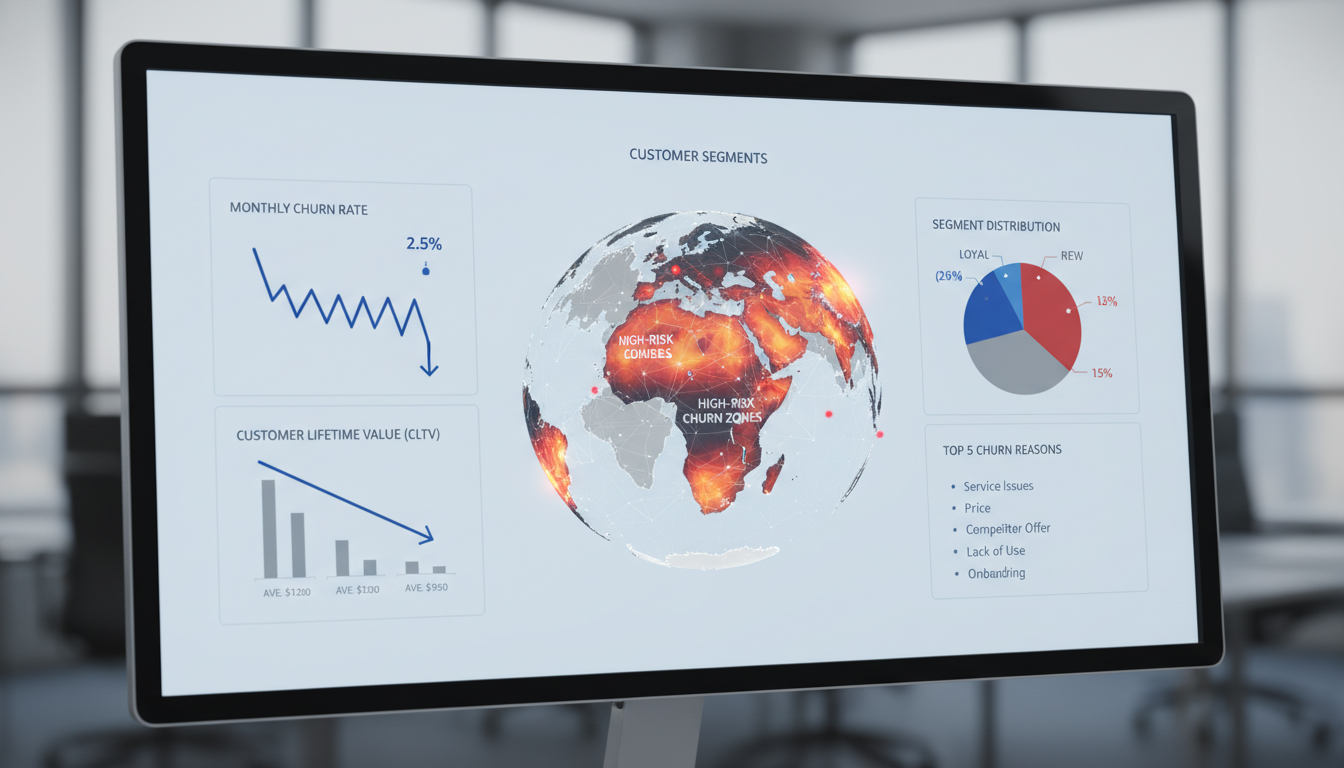
Once the model is trained, it can score current customers in real-time. A “churn score” is assigned to each individual or account, representing the probability of departure. A customer with a score of 85% is a high-risk liability, while one at 5% is a loyal advocate. This scoring allows the sales and success teams to prioritize their efforts where they are needed most.
Why CRM Integration is the Game Changer
The true power of predictive analysis is realized when it lives where the work happens: the CRM. When a churn score is visible on a customer’s profile page, it changes the conversation. A customer success manager (CSM) preparing for a quarterly business review might see a high churn risk and pivot the meeting from a standard check-in to a deep-dive problem-solving session.
Furthermore, modern CRMs allow for automation based on these scores. For example, if a customer’s churn risk crosses a certain threshold, the system can automatically:
1. Trigger a personalized discount offer.
2. Create a high-priority task for an account manager to reach out.
3. Enroll the customer in a “re-engagement” email sequence.
4. Flag the account for a specialized technical audit.
This proactive approach shifts the organizational culture from reactive fire-fighting to strategic intervention.
Beyond the Score: Qualitative Data and Sentiment Analysis
While transactional data (the “what” and “when”) is vital, the next frontier of predictive churn analysis in CRM involves sentiment analysis (the “why”). By using Natural Language Processing (NLP), businesses can analyze the tone of customer emails, chat logs, and social media mentions. If a customer is using increasingly frustrated language in their support tickets, the predictive model can adjust their churn score upward, even if their purchase frequency hasn’t changed yet. This multi-dimensional view provides a much more accurate picture of the customer’s emotional state and loyalty.

The Human Element: Using Data to Personalize, Not Just Predict
It is easy to get lost in the algorithms and forget that behind every churn score is a human being with a problem to solve. The goal of predictive analysis isn’t just to stop someone from leaving; it’s to improve their experience so they want to stay.
When the CRM flags a customer as high-risk, the data should provide clues on how to help them. If the data shows they are struggling with a specific feature of the software, the intervention should be educational. If the data shows they have been ignored for six months, the intervention should be a relationship-building outreach. Predictive analytics gives businesses the context they need to be more human, not less.
Challenges and Implementation Hurdles
Despite the benefits, implementing predictive churn analysis is not without its hurdles. The most common challenge is data quality. As the saying goes, “garbage in, garbage out.” If a CRM is filled with duplicate records, incomplete profiles, and inconsistent logging, the predictive model will be fundamentally flawed.
Another challenge is model interpretability. Some complex machine learning models act as “black boxes,” providing a churn score without explaining why the score is high. For a sales team to trust the system, they need to understand the drivers behind the risk. Is it the price? Is it the product usage? Is it the lack of communication? Modern “Explainable AI” (XAI) techniques are now being integrated into CRMs to solve this specific problem, providing clear reasons for every score.
Conclusion: The New Standard for Business Growth
In an era where customer experience is the ultimate brand differentiator, predictive churn analysis is no longer a luxury—it is a necessity. By integrating these advanced analytics directly into the CRM, businesses can move from a posture of uncertainty to one of calculated confidence. They can stop guessing who might leave and start knowing who they can save.
Ultimately, the organizations that thrive in the coming decade will be those that treat their data as a conversational tool. By listening to the signals buried in their CRM, they can foster deeper loyalty, optimize their resources, and build a sustainable engine for long-term growth. The future of retention is predictive, and it is happening inside the CRM today.