Revolutionizing the Sales Funnel: A Deep Dive into AI-Driven Lead Scoring Models

In the fast-paced world of B2B sales and marketing, the quest for the ‘perfect lead’ often feels like searching for a needle in a digital haystack. Traditional lead scoring, while helpful, has long relied on rigid, manual rules that struggle to keep up with the complexity of modern buyer journeys. Enter AI-driven lead scoring models—the sophisticated, machine-learning-powered solution that is transforming how businesses prioritize their outreach and maximize their revenue potential.
The Shift from Traditional to AI-Driven Models
To understand the magnitude of this shift, we first need to look at where we started. Traditional lead scoring operates on a ‘point system.’ For example, if a lead downloads a whitepaper, they get 10 points. If they visit the pricing page, they get 20. Once they hit a certain threshold, they are deemed ‘Sales Qualified.’
However, this approach is inherently flawed. It is based on human intuition rather than hard data. It assumes that every whitepaper download carries the same intent, regardless of who the lead is or how they interact with other content. AI-driven lead scoring flips this script. Instead of relying on static rules, AI models analyze thousands of data points across your entire CRM and marketing automation history to identify patterns that correlate with actual conversions.
How AI Lead Scoring Actually Works
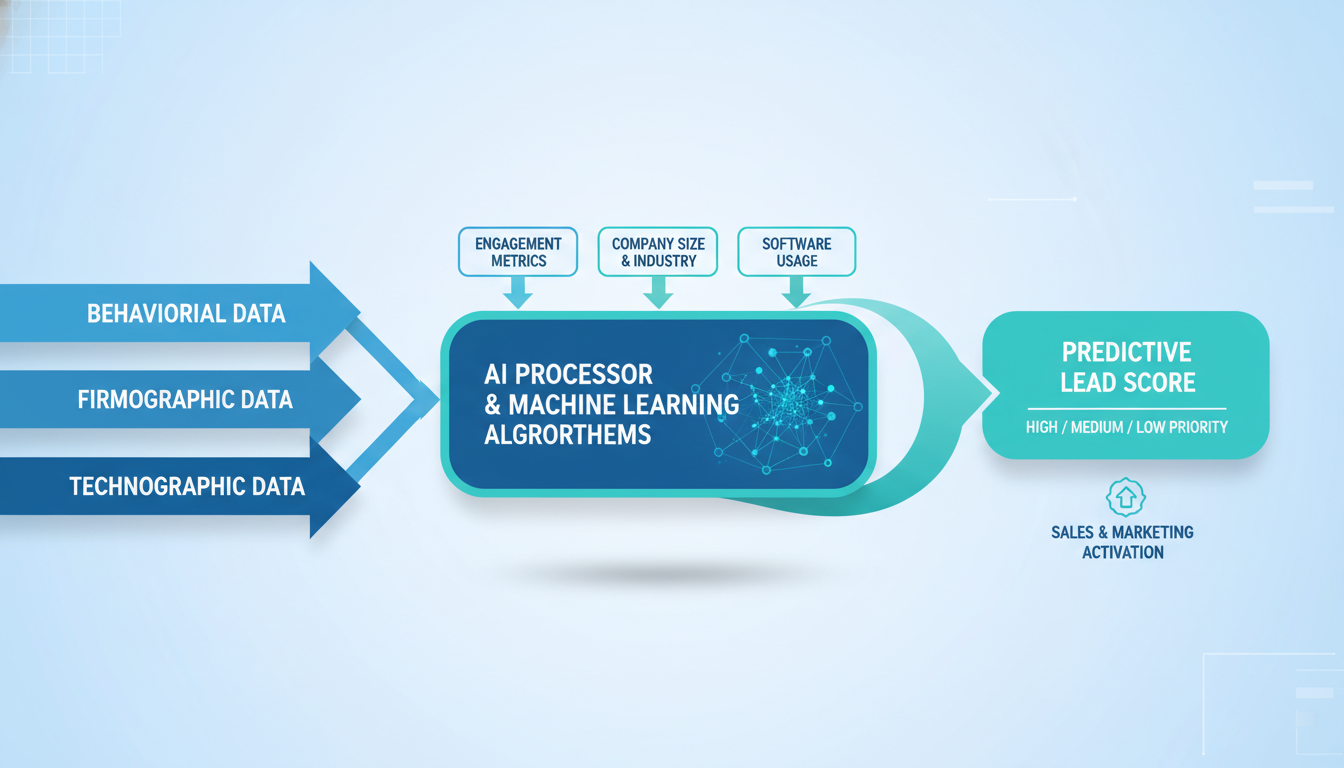
At its core, an AI-driven lead scoring model utilizes machine learning algorithms—such as logistic regression, random forests, or neural networks—to evaluate leads. These models look at three primary types of data:
1. Demographic and Firmographic Data: This includes job titles, industry, company size, and geographic location. The AI identifies which profiles historically result in the highest win rates.
2. Behavioral Data: This tracks how a user interacts with your digital presence. It’s not just about ‘what’ they clicked, but the sequence, frequency, and time spent on specific pages.
3. External Intent Data: Advanced models can even pull data from outside your ecosystem, such as third-party websites where a lead might be researching topics related to your solution.
The Benefits: Beyond Just a Number
The most immediate benefit of AI lead scoring is, of course, accuracy. By removing human bias, these models can identify ‘hidden gems’—leads that might have a low traditional score but exhibit behavioral patterns that suggest a high likelihood of closing.
Furthermore, AI models are dynamic. A traditional score is a snapshot in time. An AI model, however, learns in real-time. If a new marketing campaign starts bringing in a different type of high-converting lead, the AI notices this shift and adjusts the scoring weights automatically. This ensures that your sales team is always working on the freshest, most relevant opportunities.
Another significant advantage is the alignment between marketing and sales. We’ve all seen the tension: Marketing claims they sent over 500 leads, while Sales complains that most were ‘junk.’ AI-driven scoring provides a data-backed ‘source of truth’ that both teams can agree on, fostering a more collaborative environment focused on revenue rather than just volume.
Implementing AI Lead Scoring: A Strategic Approach
Moving to an AI-driven model isn’t as simple as flipping a switch. It requires a foundational layer of clean, organized data. If your CRM is a mess of duplicate records and missing fields, the AI will produce ‘garbage in, garbage out’ results.
First, businesses must audit their historical data. The AI needs a training set—usually at least 12 to 24 months of historical sales data—to understand what a ‘won’ deal looks like compared to a ‘lost’ one. Second, integration is key. Your lead scoring model needs to live where your sales team works, typically within Salesforce, HubSpot, or a similar CRM platform.

Overcoming the ‘Black Box’ Challenge
One of the most common critiques of AI in sales is the ‘black box’ problem—the idea that the AI provides a score but doesn’t explain why. Modern AI lead scoring platforms are solving this through ‘explainable AI.’ Instead of just giving a lead a score of 95, the system might provide ‘top predictors,’ such as: ‘Highly engaged with product documentation’ or ‘Matches the profile of our top 5% of customers in the SaaS sector.’ This context is invaluable for a sales rep when they pick up the phone to make that first call.
The Future of Sales Intelligence
As we look ahead, the role of AI-driven lead scoring will only expand. We are moving toward ‘Prescriptive Analytics,’ where the AI doesn’t just tell you who to call, but also when to call them and what specific pain points to address based on their browsing history.
In a world where buyers are 70% of the way through their journey before they even talk to a salesperson, having a tool that can predict intent and prioritize effort is no longer a luxury—it’s a competitive necessity. By embracing AI-driven lead scoring, organizations can stop guessing and start growing, turning their sales department into a precision-engineered engine for revenue generation.
Conclusion
AI-driven lead scoring is more than just a tech upgrade; it’s a fundamental shift in sales philosophy. By leveraging the power of machine learning, businesses can move away from the ‘spray and pray’ tactics of the past and toward a data-driven future. While the setup requires effort and clean data, the payoff in terms of efficiency, morale, and bottom-line growth is well worth the investment. It’s time to let the machines do the heavy lifting of data analysis, so your sales team can do what they do best: building relationships and closing deals.